 how-to
Marketability of Supernatural Fantasy Books: 2026 Guide
Table of Contents
- What Makes Supernatural Fantasy Books Marketable in 2026
- Fantasy Novel Subgenres: Where Supernatural Fantasy Sits
- How to Find the Target Audience for a Fantasy Novel
- Using Fantasy Novel Comp Titles to Position Your Book
- Fantasy Book Blurb Examples That Convert Browsers Into Buyers
- Publishing Routes and Acquisition Criteria for Supernatural Fantasy
- Discoverability Tactics: Marketing Supernatural Fantasy Books
- Risks of Trend-Chasing and Genre Blending
- Frequently Asked Questions
Last Updated: October 14, 2026
What Makes Supernatural Fantasy Books Marketable in 2026
Supernatural fantasy is having a moment, but not the one most authors think.
Here is the uncomfortable truth: most authors pitch their book as "a fresh take on vampires." Readers do not buy fresh takes. They buy a promise they already know they want, delivered in a way that feels new.
Supernatural fantasy is fiction that blends magical or otherworldly elements with real-world settings, often featuring witches, demons, vampires, werewolves, or angels living alongside ordinary people.
The 8 sections ahead cover demand signals, subgenre placement, audience research, comp titles, blurbs, publishing routes, discoverability, and the risks of chasing trends. Read the whole thing before you rewrite your query letter.
Genre Demand Signals Authors Should Track
Demand signals tell you whether readers are actively hunting for books like yours right now. Track them monthly, not once a year.
- Bestseller lists: Watch where paranormal romance and urban fantasy land on weekly lists.
- Streaming adaptations: A new supernatural series drives book sales for months.
- Library holds: Long wait times on similar titles signal unmet demand.
- Retail category rankings: Check where comparable books rank in their category.
- Reader forums: Look for recurring "books like X" requests.
The adaptation effect is real and worth planning around. When a supernatural series becomes a streaming hit, readers go looking for the next fix, and they buy fast. If your book fits that appetite, time your launch or your ad spend to ride the wave.
Fantasy Novel Subgenres: Where Supernatural Fantasy Sits
Fantasy novel subgenres are the shelf labels that tell readers what to expect, but for an author they are also the retail categories, search keywords, and acquisition signals that determine whether the right reader ever finds the book. Supernatural fantasy is one branch of a much larger tree, and knowing your exact branch changes how you pitch, where you publish, and how you describe the book in metadata.
- Urban fantasy: Magic in modern cities, often with a detective or mystery frame. Retail categories frequently sit under Fantasy > Urban. Readers search for "urban fantasy series" and "magic in the city."
- Paranormal romance: The romance drives the plot; the supernatural is the setting. Retail categories sit under Romance > Paranormal, and readers search by trope (fated mates, vampire romance, witch romance).
- Dark fantasy: Horror-tinged, morally gray, often violent. Retail categories sit under Fantasy > Dark Fantasy, and readers search for "grimdark fantasy" and "morally gray protagonist."
- Contemporary fantasy: Magic in the present day, lighter on genre tropes. Retail categories sit under Fantasy > Contemporary, and readers search for "magic realism" and "modern fantasy."
- Young adult supernatural: Teen protagonists, coming-of-age stakes, heavy romance. Retail categories sit under Teen & Young Adult > Fantasy > Paranormal & Urban, and readers search for "YA vampire books" and "teen witch books."
Placement matters because readers search by subgenre, and so do agents, editors, and retail algorithms. If your book is a paranormal romance, calling it urban fantasy will attract the wrong readers and confuse the right ones. Get the label right before you write a single query.
Genre blending is where this gets tricky. A book can sit between two subgenres, but you still need to pick a primary shelf. Choose the one that best matches your protagonist's central conflict, then mention the secondary influence in your pitch.
How to Find the Target Audience for a Fantasy Novel
Finding your target audience for a fantasy novel starts with one question: who has already bought a book just like yours? Answer that, and your marketing writes itself.
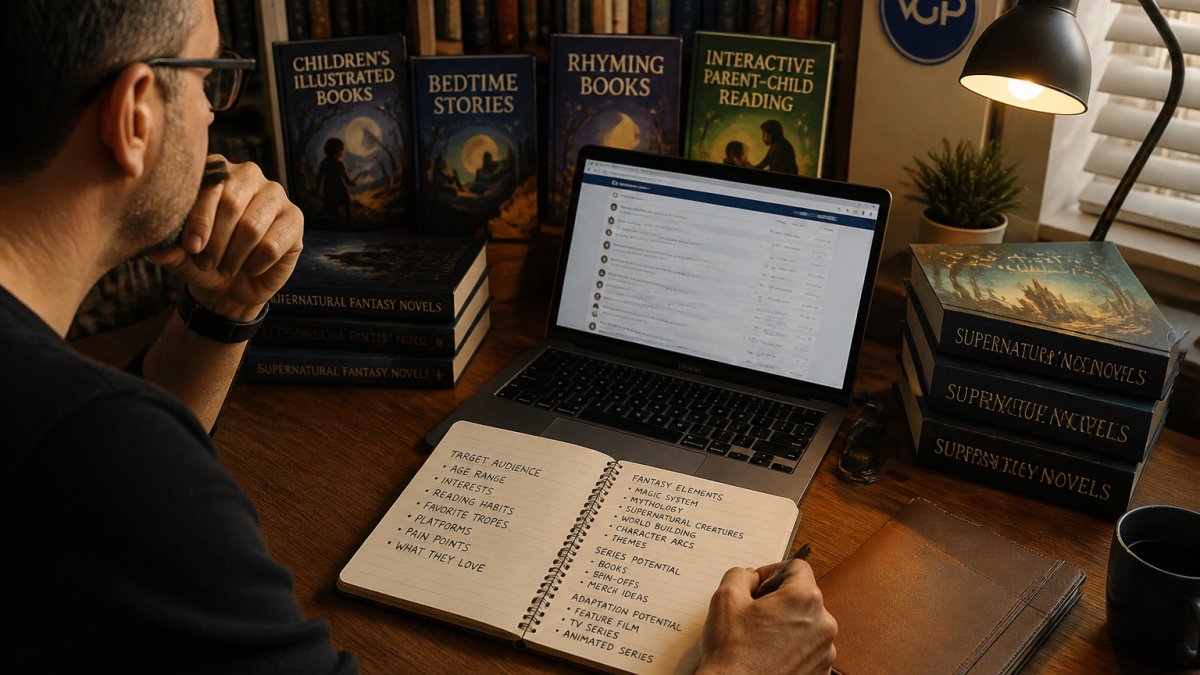
Start with comp titles, then work backward. Look at the readers who reviewed those books, the communities where they gather, and the tropes they keep asking for. That is your audience, in plain sight.
Segmenting Readers by Age, Format, and Trope Preferences
Reader segmentation works on three axes: age, format, and trope appetite. Each one changes how you position the book.
- Age: Young adult readers want teen protagonists and fast pacing. Adult readers want complexity and darker themes.
- Format: Ebook readers buy faster and read series. Print buyers gift more and browse bookstores.
- Trope appetite: Some readers want slow-burn romance. Others want enemies-to-lovers or found family.
Trope preferences are the most underrated signal. Readers now search by trope as often as by subgenre. If your book has a strong trope, put it in the blurb. If it does not, decide whether to lean into one during revision.
Using Fantasy Novel Comp Titles to Position Your Book
Fantasy novel comp titles are the published books you name to show where yours fits. They are not "books I like." They are the two or three titles that prove a market exists for your book.
Pick comps that are recent, similar in tone, and successful enough to matter but not so famous they dwarf you. A book published in the last three years that sold well is a stronger comp than a decade-old bestseller.
| Comp Type | What It Proves | Best Used For |
|---|---|---|
| Recent bestseller | Market demand exists now | Query letters, pitches |
| Midlist success | A niche audience buys this | Positioning, ads |
| Streaming adaptation | Cross-media appeal | Marketing angle |
| Debut hit | New authors can break in | Agent conversations |
The mistake most authors make is picking comps that are too big. Naming a massive franchise title tells an agent you do not understand the market. Naming a midlist book with a clear audience tells them you do.
Fantasy Book Blurb Examples That Convert Browsers Into Buyers
Fantasy book blurb examples that work follow a formula: a hook line, a protagonist with a problem, a supernatural twist, and a stake that forces a choice. The blurb sells the feeling, not the plot.
Here is a fill-in template you can use today:
[Hook line: one sentence that names the central conflict.] [Protagonist name] has [a specific problem tied to their power or identity]. When [the inciting event], they must [the choice they face] before [the consequence]. But [the twist that raises the stakes], and [the cost of failure]. Perfect for readers who love [trope] and [comparable title].
Notice what the template does not do. It does not summarize the whole book. It does not name every character. It gives the reader one clear promise and a reason to turn the page.
Test your blurb by reading it aloud. If you stumble, readers will too. If it takes more than 30 seconds, it is too long.
Publishing Routes and Acquisition Criteria for Supernatural Fantasy
Publishing routes for supernatural fantasy split into three paths: traditional, independent, and hybrid. Each has different acquisition criteria, timelines, and trade-offs.
- Traditional: You query agents, then publishers. Slow, selective, strong distribution.
- Independent: You control everything. Fast, but you fund and market the book.
- Hybrid: You pay a publisher for services. Mixed results; vet carefully.
What Agents and Editors Look for in 2026
Agents and editors want three things: a clear subgenre, a strong hook, and proof you understand the market. They are not looking for the most original idea. They are looking for a book they can sell to a specific audience.
- A query that names the subgenre in the first line
- Comp titles from the last three years
- A protagonist with a defined arc
- Evidence you know where the book sits on the shelf
For authors who want help shaping a manuscript before submission, working with a team that understands both storytelling and market positioning can save months of rejected queries.
Discoverability Tactics: Marketing Supernatural Fantasy Books
Discoverability is the hardest part of publishing, and it is where most authors give up too early.
1. Metadata and keywords. Retail search rewards consistency.
2. Category placement. Most retailers allow you to request specific categories. Choose two or three where your comp titles already rank, not the broadest category available.
3. Cover conventions. Supernatural fantasy covers signal subgenre at a glance.
4. Reader communities. Forums, groups, and newsletters reach buyers directly.
5. Adaptation tie-ins. When a supernatural series becomes a streaming hit, readers go looking for the next fix.
6. Launch sequencing. Most authors see the best results when they concentrate effort into a two-week launch window rather than spreading it thin over months.
Risks of Trend-Chasing and Genre Blending
Trend-chasing feels safe, but it usually backfires. By the time you finish a manuscript built around a hot trend, the market has moved on, and your book reads as derivative.
Genre blending carries its own risk. A book that mixes too many subgenres confuses readers and algorithms alike. Pick a primary genre, then let the secondary influence add flavor without taking over the shelf label.
Here is the balance: study the market so you know what readers want, then write the book only you can write. Marketability and originality are not opposites. They are a negotiation.
Frequently Asked Questions
What makes a supernatural fantasy book marketable?
Marketability comes down to a clear genre promise, a protagonist with stakes readers care about, and positioning that connects to current demand. Books that blend familiar tropes with a fresh angle tend to perform better. A strong blurb, comparable titles, and a defined audience all matter. For example, a novel featuring witches in a contemporary setting can appeal to urban fantasy readers while also attracting paranormal romance fans if the romantic thread is prominent. Authors should test their concept against recent bestsellers in the same subgenre.
Is the fantasy book market oversaturated?
The fantasy market is crowded, but demand remains steady across subgenres like paranormal romance, urban fantasy, and young adult supernatural. The key is differentiation. Books that offer a unique twist, such as a nonhuman protagonist or a specific cultural lens, stand out. Authors should study recent releases and sales trends to find gaps. While many titles launch each year, readers actively seek new series and fresh voices, so a well-positioned book can still find its audience.
How do I find the target audience for my fantasy novel?
Start by identifying the subgenre and comparable titles. Look at reader reviews on platforms like Goodreads to see what fans of similar books discuss. Segment by age (young adult vs. adult), format (series vs. standalone), and trope preferences (e.g., enemies-to-lovers, chosen one). Join online communities where readers gather and observe their language. This research shapes your blurb, cover, and marketing messages. Tools like Amazon categories and bestseller lists also reveal where your book fits.
What should a fantasy book blurb include to attract readers?
An effective blurb introduces the protagonist, the central conflict, and the stakes in a few sentences. It should hint at the supernatural elements and the emotional core. Avoid overloading with world-building details. Instead, focus on the hook: what makes this story different? End with a question or a promise that compels the reader to open the book. Studying blurbs of successful supernatural fantasy novels can provide a template, but always tailor it to your unique story.
The hardest part of selling a supernatural fantasy novel is not the writing. It is positioning the book so the right readers can find it. At VGP Author, we help authors develop supernatural fantasy novels with market-ready structure, from comp title strategy to blurb writing and beyond. We also produce feature films, so a strong manuscript can grow into something bigger. Get started with VGP Author and turn your manuscript into a book readers can actually find.