 how-to
How to Write Rhythmic Children's Stories: A Step-by-Step Guide
Table of Contents
- Understanding Rhythm and Meter in Children's Stories
- How to Write a Rhyming Children's Book with Natural Cadence
- Using Children's Story Repetition Examples to Strengthen Rhythm
- How to Read a Children's Story Aloud for Rhythm Testing
- Picture Book Manuscript Length and Rhythm Balance
- Scanning Syllables and Marking Stressed Beats
- Common Mistakes to Avoid When Writing Rhythmic Stories
- Putting It Together: A Drafting and Revision Workflow
- Frequently Asked Questions
Last Updated: October 11, 2026
Understanding Rhythm and Meter in Children's Stories
Rhythm is what makes a children's story flow when read aloud. It's the natural beat you hear in the language, separate from whether the words rhyme. Understanding the difference between these two elements is the first step toward writing rhythmic children's stories that feel effortless to read.
What Makes Rhythm Different from Rhyme
Rhyme is when two words have matching ending sounds. Rhythm is the pattern of stressed and unstressed syllables, the heartbeat underneath the words. You can have perfect rhymes with terrible rhythm, and you can have beautiful rhythm with no rhyme at all.
Consider these two lines:
- "The cat sat on the mat" (rhythm-first: natural cadence)
- "The feline creature positioned itself upon the woven floor" (forced to rhyme later: awkward, clunky)
The first line has a clear, bouncy rhythm. The second one doesn't flow naturally, even before you try to rhyme it. This is where most writers go wrong: they chase the rhyme and destroy the rhythm in the process.
Iambic and Anapestic Meter Explained
Two meters dominate children's literature because they match natural speech patterns. Iambic meter uses a pattern of unstressed-stressed syllables (da-DUM). Anapestic meter uses unstressed-unstressed-stressed (da-da-DUM). Both feel natural when read aloud to young listeners.
Iambic rhythm appears in classics like Dr. Seuss's early work. Anapestic rhythm drives many nursery rhymes. Neither is "better", they're tools for different effects. Iambic feels measured and steady. Anapestic feels bouncy and playful.
How to Write a Rhyming Children's Book with Natural Cadence
The secret to writing rhythmic children's stories lies in choosing your meter before you write a single line. Too many writers start with an idea and force the meter later. That's backwards. Your meter shapes everything.
Choosing Your Meter Before You Draft
Decide whether your story needs iambic or anapestic rhythm before you begin. Read aloud some published books in your target age group. Notice the pattern. Does it feel steady (iambic) or bouncy (anapestic)?
Write down your first few sentences in your chosen meter. Don't worry about rhyming yet. Get the rhythm solid. This takes 20-30 minutes but saves hours of revision.
For toddler books (ages 2-4), anapestic meter works better because it's playful and forgiving. For early readers (ages 5-7), iambic meter provides structure without feeling sing-songy. Knowing this before you draft prevents false starts.
Building Rhythm Through Word Choice and Line Length
Short words create faster rhythm. Long words slow it down. This is a tool. Use it intentionally.
"The small cat ran fast" moves quickly. "The diminutive feline creature accelerated rapidly" crawls. Neither is wrong, they serve different moments in your story.
Line length matters equally. Shorter lines feel punchy. Longer lines feel reflective. Mix them strategically. A page of identical line lengths becomes monotonous no matter how good the rhythm is.
Using Children's Story Repetition Examples to Strengthen Rhythm
Repetition is the most powerful rhythmic tool in children's literature. It reinforces meter, builds anticipation, and helps young readers predict patterns. But repetition can also destroy a story if overused.
Repetition as a Rhythmic Tool
Repetition anchors rhythm in a child's memory. Consider "Brown Bear, Brown Bear, What Do You See?" The repeated structure creates a drumbeat that children internalize immediately. They start predicting the next line before you read it.
This works because the repetition is structural, it repeats the sentence pattern, not just random words. The rhythm stays consistent across each repeated line, which trains the listener's ear.
When you use children's story repetition examples effectively, you're not just repeating words. You're repeating a rhythmic pattern that becomes a song without being sung.
Avoiding Monotony While Repeating Patterns
Repetition without variation becomes boring fast. The trick is to keep the rhythmic structure identical while changing the content inside it.
Instead of: "The dog ran. The cat ran. The bird ran. The fish ran."
Try: "The dog ran fast. The cat ran faster. The bird ran fastest. The fish... couldn't run at all."
The rhythm stays consistent. The content shifts. Interest stays high.
How to Read a Children's Story Aloud for Rhythm Testing
Reading aloud is not optional, it's your primary testing tool. If a sentence doesn't flow naturally when spoken, it won't work for young listeners either.
Listening for Natural Speech and Cadence
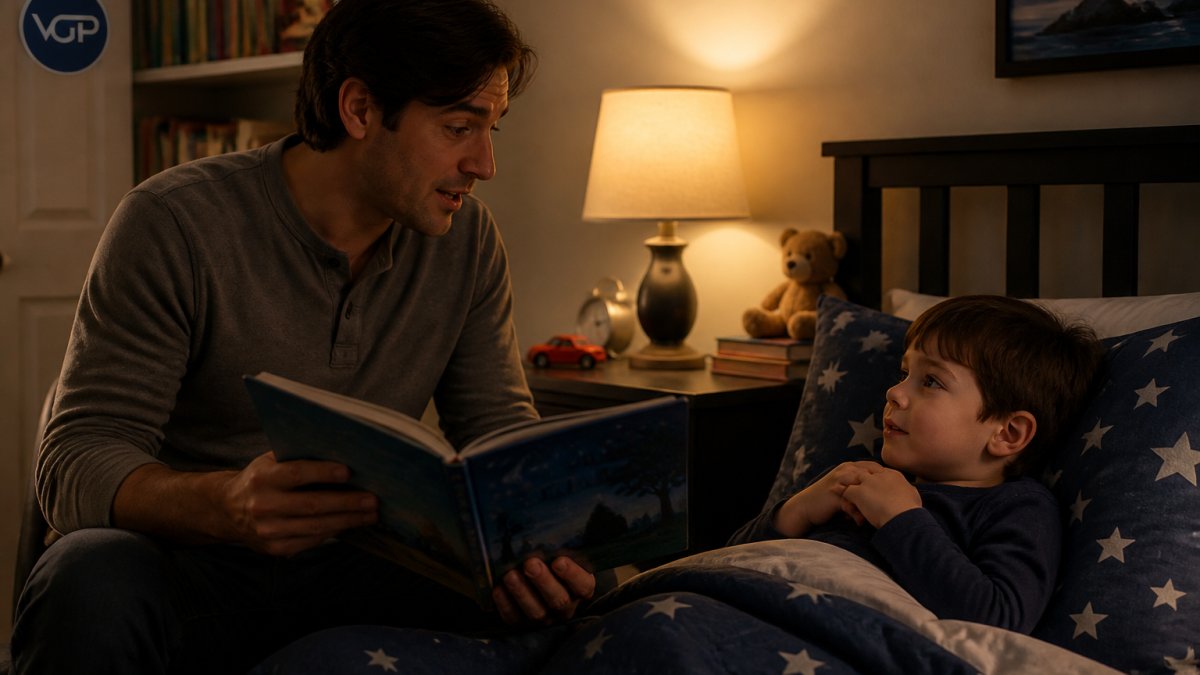
Read your manuscript aloud slowly. Don't perform it. Just read it like you're talking to a friend. Notice where you naturally pause. Notice where you rush. Notice where you stumble.
Stumbling is information. It means the rhythm is broken there. Your mouth knows what your eyes missed.
Record yourself reading a page. Listen back. You'll hear awkward phrasing you didn't notice while reading. This is normal. Fix those spots.
Age-Specific Read-Aloud Considerations
Toddlers (ages 2-4) need shorter lines and faster pacing. Read faster than you think you should. Pause briefly between lines. Their attention span is short, so rhythm must grab them immediately.
Early readers (ages 5-7) can handle longer lines but still need clear rhythm. They're beginning to read along, so meter matters for their comprehension. If rhythm is unclear, they lose the story.
Older children (ages 8-12) appreciate subtle rhythm and more complex meter patterns. They can follow longer narratives, but rhythm still carries the emotional weight of the story.
Picture Book Manuscript Length and Rhythm Balance
Length affects rhythm directly. A 500-word picture book moves faster than a 1,000-word one. Shorter books demand tighter rhythm. Longer books allow for variation and complexity.
Word Count Guidelines for Different Age Groups
Picture books for toddlers typically run 200-500 words. Early reader books run 500-1,000 words. Chapter books for older children run 1,000-5,000 words. These aren't hard rules, they're guidelines based on attention span and reading ability.
Shorter doesn't mean simpler. A 200-word toddler book requires more rhythmic precision than a 2,000-word chapter book because every word carries more weight.
How Length Affects Rhythmic Pacing
A 300-word picture book needs consistent, bouncy rhythm throughout. Readers expect no slowdowns. A 2,000-word book can vary its pacing, fast sections, slow sections, building tension. The rhythm can shift with the story's emotional arc.
This is why how to write a rhyming children's book requires knowing your target length before you start. Length determines your rhythmic strategy.
Scanning Syllables and Marking Stressed Beats
Scansion is the process of marking stressed and unstressed syllables to visualize your meter. It looks technical but it's just a way to see what your ear already knows.
Step-by-Step Scansion Process
Take one line from your manuscript. Write it out. Mark each syllable as stressed (/) or unstressed (u). For "The cat sat on the mat":
- The (u) cat (/) sat (u) on (/) the (u) mat (/)
This is iambic tetrameter, four iambic feet. Now you can see your pattern clearly.
Do this for 5-10 lines. You'll spot where the meter breaks. Those breaks are revision points.
Revising Based on Scansion Results
If your scansion shows irregular stress patterns, rewrite those lines. Replace words that don't fit the meter. "The feline sat" instead of "The cat sat", wait, that's actually worse. Try "The small cat sat" instead.
Scansion prevents guessing. It shows exactly where the problem is.
Common Mistakes to Avoid When Writing Rhythmic Stories
Most writers make the same three mistakes repeatedly. Knowing them saves you months of wasted effort.
Forcing Rhymes at the Expense of Story
This is the #1 mistake. Writers choose a rhyme word, then twist the story to fit it. The result reads like a ransom note.
Bad example: "The princess wore a crown of gold / And she was very very very old" (forced to rhyme with "gold")
The rhythm breaks. The story makes no sense. The rhyme isn't worth it.
Fix: Write the story first. Rhythm second. Rhyme third. If a natural rhyme doesn't exist, don't force one.
Using Filler Words and Awkward Phrasing
Filler words destroy rhythm. Words like "very," "really," "quite," and "just" pad sentences without adding meaning. They also break meter.
"The dog was very very happy" has awkward rhythm and wastes syllables. "The dog leaped with joy" is tighter and more rhythmic.
Read your draft and delete every filler word. Your rhythm improves immediately.
Neglecting Rhythm Beyond End Rhyme
Many writers focus only on end rhymes and ignore the rhythm inside lines. Internal rhythm matters just as much. A line can rhyme perfectly but still feel awkward.
Good rhythmic children's stories use rhythm throughout the line, not just at the end. Read lines for their internal flow, not just their rhyming words.
Putting It Together: A Drafting and Revision Workflow
Here's how to move from concept to a finished rhythmic children's story without wasting months on revision.
From First Draft to Final Read-Aloud Test
Step 1: Choose your meter (30 minutes). Read published books in your age group.
Step 2: Draft without rhyming (2-3 hours). Write your complete story in your chosen meter.
Step 3: Add rhymes naturally (2-4 hours). Go back through.
Step 4: Scan 10 key lines (1 hour). Pick the lines that feel weakest.
Step 5: Read aloud three times (1 hour). Record yourself. Listen back. Fix stumbling points.
This workflow keeps you from spinning your wheels. You move forward systematically instead of revising endlessly.
| Step | Time Required | Focus | Deliverable |
|---|---|---|---|
| Choose meter | 30 minutes | Meter selection | 3-5 test sentences |
| Draft without rhyming | 2-3 hours | Rhythm only | Complete rough draft |
| Add rhymes naturally | 2-4 hours | Story + rhyme | Draft with rhymes |
| Scan key lines | 1 hour | Meter validation | Scanned lines with fixes |
| Read aloud | 1 hour | Flow testing | Smooth read-through |
| Test with audience | 1 week | Engagement | Revision notes |
Writing rhythmic children's stories requires patience and a clear process.
VGP Author works with writers who want to master this craft. We specialize in children's illustrated books, bedtime stories, and rhyming books that engage young readers.
Frequently Asked Questions
What's the difference between rhythm and rhyme in children's stories?
Rhythm is the pattern of stressed and unstressed syllables that creates a musical flow when you read aloud. Rhyme is the matching of end sounds in words. You can have rhythm without rhyme, and forced rhyme without good rhythm. Strong rhythmic children's stories often use both, but rhythm, the beat and cadence, is what makes a story feel natural and engaging to read aloud.
How do you check the rhythm of a picture book manuscript?
Read your manuscript aloud and listen for a consistent beat. Mark stressed and unstressed syllables on the page (scansion). If you stumble over lines, trip on word combinations, or feel like you're forcing emphasis, your rhythm needs work. Ask someone else to read it aloud, they'll catch awkward phrasing you've become blind to. Record yourself and listen back; you'll hear where the cadence breaks.
How long should a rhyming picture book be?
Picture books for ages 2-5 typically run 200-400 words. For ages 5-8, aim for 400-800 words. Shorter word counts demand tighter rhythm and more precise language, every word must earn its place. Longer manuscripts need varied rhythmic patterns to prevent monotony. Length should serve your story, not the other way around. Test your manuscript aloud at your target age group's attention span.
Can you use repetition to make a children's story more engaging?
Yes. Repetition strengthens rhythm and helps young readers anticipate and participate in the story. Use repeated phrases, refrains, or structural patterns, but vary what comes between repetitions to avoid monotony. For example, a repeated opening line paired with different actions each time creates rhythm while keeping the story fresh. Repetition also supports early literacy by helping children recognize patterns and predict text.