 blog
blog
Best Bedtime Stories for Toddlers: A Parent's Guide
Table of Contents
- What Makes a Bedtime Story Right for a Toddler
- Building a Bedtime Routine for Toddlers Around Stories
- Best Bedtime Stories for Ages 0-3
- Best Bedtime Stories for Ages 3-5
- Why Rhyming Books for Toddlers Work at Bedtime
- Interactive Reading for Toddlers: Tips That Keep Them Engaged
- Sensory-Inclusive and Bilingual Bedtime Stories
- Print vs. Digital: Screen Time and Sleep
- Frequently Asked Questions
Last Updated: October 2, 2026
What Makes a Bedtime Story Right for a Toddler
The best bedtime stories for toddlers are short, rhythmic, and visual. They calm rather than excite, and they end on a safe, sleepy note. We write and publish children's books built around exactly these principles.
Length, Language, and Visual Engagement
A good toddler story runs 5-10 minutes read aloud, matching a young child's attention span and keeping the ritual predictable.
Three things matter most:
- Length: 200-500 words for ages 0-3, up to 800 for ages 3-5
- Language: simple words, repeated sounds, and a steady rhythm
- Visuals: large, clear pictures that match the text on each page
Building a Bedtime Routine for Toddlers Around Stories
A bedtime routine for toddlers works best in the same order every night, with the story as the last step before lights out.
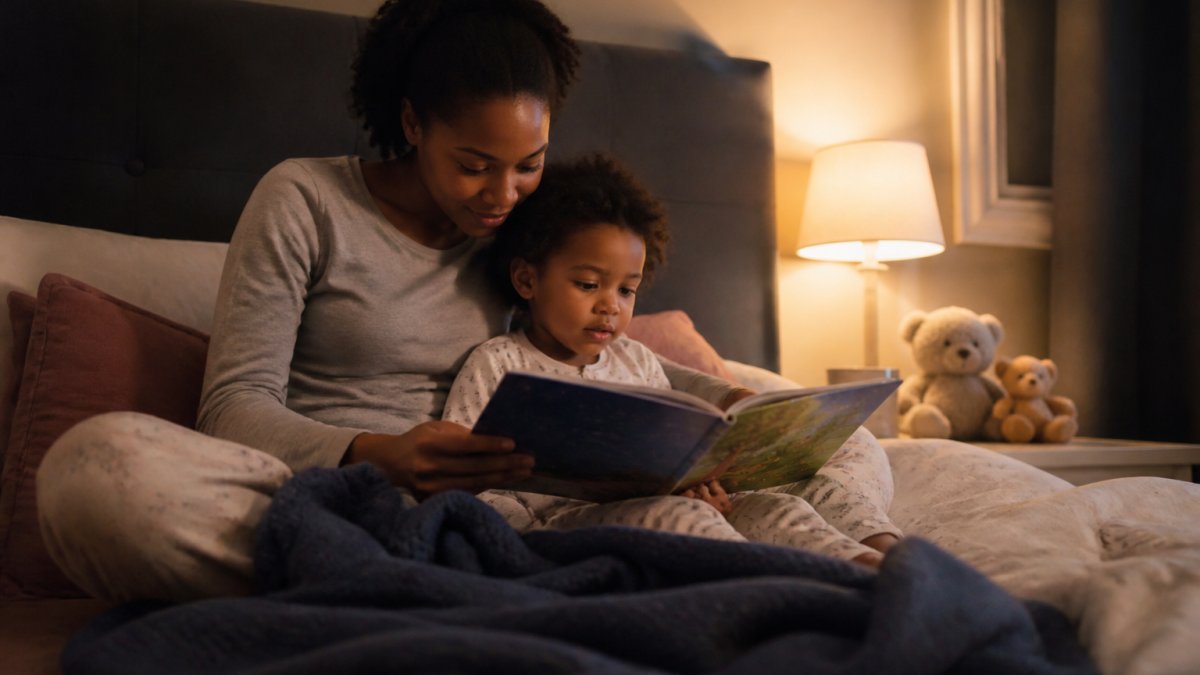
A simple sequence that many families find effective:
- Bath or quiet play
- Pajamas and teeth
- One story, read slowly
- A song or goodnight phrase
- Lights out
Best Bedtime Stories for Ages 0-3
For ages 0-3, the best bedtime stories are board books with few words and bold pictures. Babies and young toddlers learn through sound and touch, not plot.
Look for books that:
- Use repeating phrases your child can join in on
- Feature soft colors and calm scenes
- Have sturdy pages that survive grabbing and chewing
- End with the character going to sleep
Short Stories for Calming and Sleep
Short stories of 5-10 minutes are ideal for winding down, giving a toddler a complete beginning, middle, and end without pushing past their limit.
Calming narratives share a few traits:
- A slow, steady pace
- Gentle sounds and soft rhymes
- A main character who also goes to sleep
- No cliffhangers or big emotional swings
Best Bedtime Stories for Ages 3-5
Ages 3-5 can handle more story: they follow a plot, remember characters, and ask questions. This is also when content matters as much as rhythm, a scary image or unresolved conflict can follow a child into sleep, so the goal shifts from "short and rhythmic" to "short, rhythmic, and emotionally resolved."
At this stage, you can introduce:
- Longer picture books with a clear narrative arc (roughly 500-800 words)
- Stories with a small problem and a happy resolution
- Books that teach a moral lesson without preaching
- Series with the same characters, which build anticipation
Titles That Hold Up Night After Night
A few well-known books earn their place in the rotation because they hit the length, rhythm, and resolution marks at once:
- Goodnight Moon by Margaret Wise Brown, the classic proof that a story can have almost no plot and still work, because the rhythm and the goodnight ritual do the soothing.
- The Going to Bed Book by Sandra Boynton, short, silly, and ends with the animals asleep, which mirrors the child's own routine.
- How Do Dinosaurs Say Goodnight? by Jane Yolen, uses a question-and-answer structure that lets a toddler predict and participate.
- Guess How Much I Love You by Sam McBratney, a gentle, low-conflict story that ends on a settled, safe note.
- Llama Llama Red Pajama by Anna Dewdney, names the separation anxiety many toddlers feel at lights-out and resolves it, which is why it works as a bedtime book rather than just a funny one.
What to Avoid at This Age
Three-to-five-year-olds can be frightened by things that would not bother a baby. Watch for:
- Separation as a threat, stories where a parent leaves and does not return on the page
- Loud, sudden surprises, pop-ups, jump-scare page turns, or shout-along refrains
- Unresolved endings, a character left sad, lost, or in danger at "The End"
- Long, complex plots, a book that needs a recap tomorrow is a book that keeps the brain awake tonight
Fairy Tales, Fables, and Moral Lessons
Fairy tales and fables give older toddlers their first taste of story structure: clear heroes, simple conflicts, and satisfying endings.
Why Rhyming Books for Toddlers Work at Bedtime
Rhyming books for toddlers work because rhythm soothes. The steady beat of a rhyming verse slows breathing and calms the nervous system, much like a lullaby.
What to look for in a rhyming bedtime book:
- A consistent, gentle meter
- Rhymes that feel natural, not forced
- A soft, sleepy theme
- Words your child can predict and repeat
Interactive Reading for Toddlers: Tips That Keep Them Engaged
Interactive reading for toddlers turns a passive story into a shared activity, keeping a wandering attention span focused and building the parent-child bond. But at bedtime, the same techniques that engage during the day can wind a toddler up at night, the skill is knowing which dials to turn down.
The Bedtime Version of Interactive Reading
Try these approaches, with the bedtime adjustment built in:
- Point and name: Pause to point at pictures and ask "What's that?", but keep your voice low and slow, and don't wait too long for an answer. At bedtime, the point is attention, not a quiz.
- Pause and predict: Stop before a rhyme and let your child finish it. This works best with a book they already know, so the answer is easy and the win is quick.
- Sound effects: Add soft animal sounds or yawns. Avoid anything loud, a whispered "moo" soothes; a shouted one does the opposite.
- Questions: Ask "Where's the moon?" or "Is bear sleepy?" Choose questions with calm answers, not exciting ones.
- Turn the page together: Let your child do it. This gives them a physical role in the routine without adding stimulation.
Keep your voice low and slow: the goal is connection and calm, not a quiz. If your child gets excited, bring the energy down with a soft phrase or a yawn.
The Overstimulation Trap
Most interactive-reading advice targets daytime or classroom settings, where energy can run high. Bedtime is a different job, and a few common techniques backfire at night:
- Asking open-ended questions ("What do you think happens next?") invites a long, imaginative answer right when you want the brain to slow down.
- Acting out the story turns a wind-down into a play session.
- Letting your child choose a new book every night removes the predictability that makes the routine work.
For Children Who Don't Settle with a Standard Picture Book
Some toddlers, particularly those who are neurodivergent, sensitive to sensory input, or still learning to regulate, do not respond to the standard "sit still and listen" model. For them, the interactive element is not optional; it is what makes the story tolerable.
A few adaptations that parents commonly find helpful:
- Let them move. A child who needs to pace or rock can still listen. Requiring stillness can become its own battle.
- Use a fidget or a soft toy as a "reading buddy" that the child holds while you read.
- Choose predictable, repetitive text so the child always knows what is coming, this reduces the cognitive load that can make a story feel overwhelming.
- Shorten the story rather than skipping it. Two minutes of a familiar book beats ten minutes of a struggle.
- Offer a choice between two books, not the whole shelf. Choice within limits preserves routine while giving the child agency.
Sensory-Inclusive and Bilingual Bedtime Stories
Not every toddler settles with a standard picture book. Some need stories that engage the senses or reflect more than one language at home.
Sensory-inclusive stories may include:
- Textures to touch on each page
- Rhythmic or sing-song text for children who respond to sound
- High-contrast or simple images for visual comfort
- Predictable, repetitive structure for children who need routine
Print vs. Digital: Screen Time and Sleep
Print books beat screens for bedtime: screens emit light and invite interaction that wakes a child up, while paper books signal rest.
A few practical differences:
Feature | Print Book | Screen Story |
|---|---|---|
Light | Reflected, soft | Emitted, stimulating |
Interaction | Calm, shared | Taps and alerts |
Routine cue | Strong | Weak |
Sleep effect | Supports wind-down | Can delay sleep |
Frequently Asked Questions
What are some good bedtime stories for a 2-year-old?
For 2-year-olds, choose short stories with simple language, repetitive phrases, and bright pictures. Books featuring animals, familiar routines, or rhyming text work well because they hold attention and help with winding down. Look for board books or sturdy picture books that can survive toddler handling. Stories that end on a calm, sleepy note signal to your child that it is time to rest.
How long should a bedtime story be for a toddler?
Most toddlers can follow a story for 5 to 10 minutes before losing focus. For ages 0-3, aim for 5 minutes or fewer with simple picture books. For ages 3-5, you can stretch to 10 minutes if the story has engaging visuals and a clear narrative. Reading the same book repeatedly is fine and actually helps build literacy skills and attention span over time.
Are rhyming books better for toddler bedtime stories?
Rhyming books are not automatically better, but they do offer specific advantages. The rhythm and repetition in rhyming books for toddlers help with language acquisition, make the story easier to remember, and create a soothing, almost musical flow that supports calming narratives. Many parents find that rhyming text keeps toddlers engaged longer. The key is choosing rhymes that read naturally aloud, not forced ones.
How can bedtime stories help establish a healthy sleep routine?
Reading a story as part of a consistent bedtime routine for toddlers signals that sleep is coming. The act of sitting together, hearing a calm voice, and focusing on a story helps children transition from active play to winding down. Over time, the story becomes a cue that triggers drowsiness. Pairing the story with other steps like brushing teeth and dimming lights strengthens the routine.
Bedtime can feel like a nightly negotiation, but the right stories make it easier. VGP ARTIST MANAGEMENT INC writes and publishes children's illustrated books, rhyming books, and interactive bedtime stories built to support routines, early literacy, and bonding moments. Our catalog includes calming narratives for the youngest readers and gentle tales for ages 3-5. Get started with VGP ARTIST MANAGEMENT INC and turn story time into the calmest part of your day.